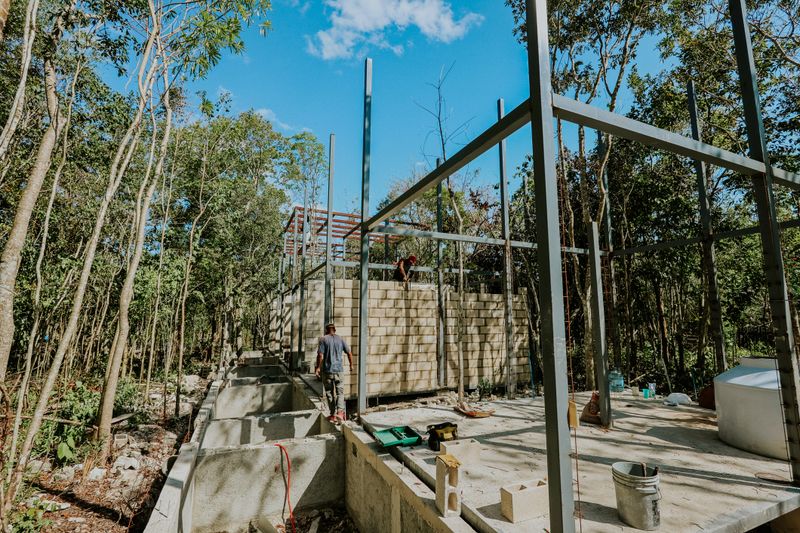
Two plots, same hillside, same sea view, prices within ten percent of each other. One can be sold, mortgaged, built on and insured. The other cannot legally be transferred to you at all. Nothing on site tells you which is which. The difference is the document.
Thai land documents form a hierarchy of certainty. Knowing where a plot sits on that hierarchy is the single most valuable thing you can learn before negotiating.
Chanote (Nor Sor 4 Jor) — full title
The strongest document. A Chanote is a true freehold title deed, with boundaries fixed by GPS survey and marked by numbered concrete posts on the ground. It can be sold, leased, mortgaged and registered without ambiguity. Any transaction registered against it — a sale, a mortgage, a lease, a usufruct — is recorded on the back of the deed held at the Land Office.
If you are buying land for a villa you intend to keep, this is what you want. Paying a premium for Chanote land over a lesser document is usually not a premium at all; it is the price of the asset being real.
Nor Sor 3 Gor — confirmed possessory right
A certificate of use with boundaries surveyed relative to aerial photography rather than fixed by GPS posts. It can be sold, leased and mortgaged, and can normally be upgraded to Chanote. It is a legitimate document that a large amount of usable land on Samui still sits on.
The caution is boundaries. Because the survey method is less precise, the registered area and the fenced area diverge more often than buyers expect — and on a hillside plot sold by the rai, a few percent is real money. Commission a survey against the title plan before you commit.
Nor Sor 3 — the older cousin
Similar in nature but with no confirmed survey. A transfer requires a 30-day public notice period before registration. Workable, but slower, and the boundary risk is higher again.
Sor Por Kor 4-01 — agricultural allocation
Land allocated to Thai nationals for agricultural use under a land reform programme. It cannot be sold on the open market, cannot be transferred to a foreigner or a company, and cannot legally be used for a residential development. It is inherited within the family and that is essentially all.
It still appears in listings. Sometimes it is offered with a story about how the transfer will be arranged, or about someone who knows someone at the relevant office. There is no version of that story that ends with you holding a valid title.
Por Bor Tor 5 and similar — a tax receipt, not a title
A Por Bor Tor 5 is essentially evidence that someone has been paying a local land tax on a parcel. It is not a document of ownership and confers no right to build or transfer. Treat any plot offered on this basis as unbuyable until it has been formally upgraded, which is a process with no guaranteed outcome.
What a proper title check involves
Reading a photograph of a deed is not due diligence. A real check means someone physically attending the relevant provincial or district Land Office with the title reference and examining the office's own record, which is the version that matters. That record shows:
- The document type and grade, confirmed rather than claimed
- The registered owner, and whether the person selling has the authority to sell
- Mortgages, charges, registered leases, usufructs and servitudes already recorded
- The transfer history, which can reveal recent flipping or a chain that does not make sense
- The registered area, against which a site survey can be compared
- Whether the plot has registered legal access, as opposed to a track everyone currently uses
Access deserves its own paragraph. On Samui, a surprising number of otherwise clean hillside plots reach the public road across land belonging to someone else. Neighbourly tolerance is not a right of way. If access is not registered as a servitude, it can be withdrawn — and the moment it is withdrawn, your plot is worth a fraction of what you paid.
The order to do things in
Title check first, negotiation second, deposit third. Buyers routinely reverse the first two, then discover an issue after they are emotionally and financially committed. A verification costs a small fraction of a deposit and regularly ends the conversation before that deposit is paid, which is exactly what it is for.
General information, not advice. Thai property law is applied case by case and changes over time. Nothing here replaces an opinion from a licensed Thai lawyer on your specific plot, structure and circumstances. Figures are indicative ranges observed in the market, not quotations.